
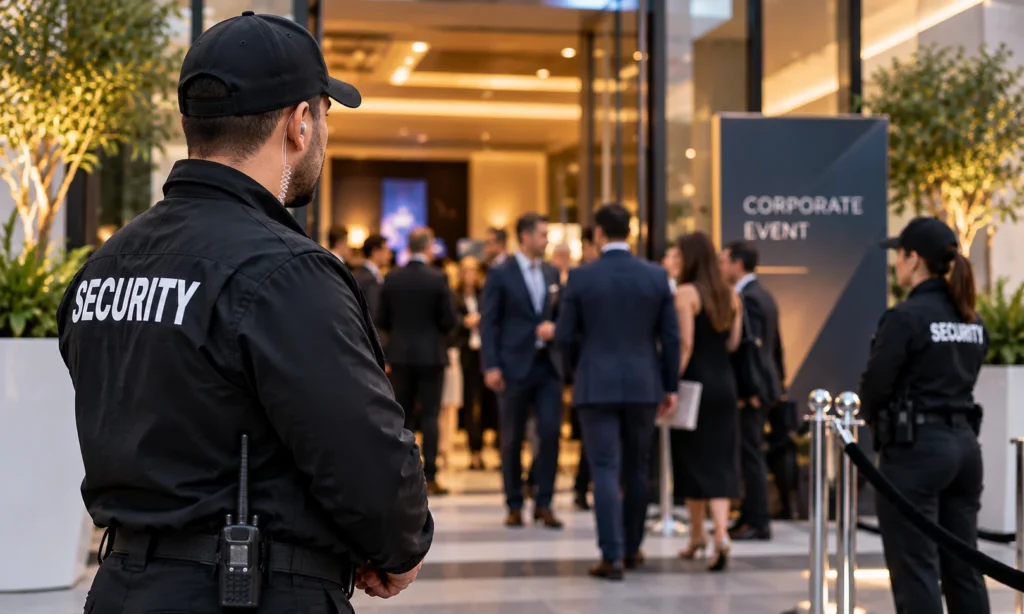
A corporate event represents your business to employees, clients, partners and guests. Security should help protect people and property while allowing the event to run smoothly. The right arrangements depend on the venue, guest numbers, format, schedule and specific risks, not just the size of the guest list.
A conference, awards night, product launch and staff celebration each create different needs. A conference may have several session rooms and registration points; an evening function may involve alcohol, late trading or guest departures at the same time. Planning early gives organisers, venues and security providers time to agree responsibilities. Avatar Security provides event security in Melbourne for corporate and public events.
Key Takeaways
- Start with a risk review and venue walk-through.
- Set clear roles for access control, patrols, guest support and incident escalation.
- Share the event schedule and emergency arrangements with the security lead.
- Choose coverage based on the venue and risks, not a generic staffing ratio.
What should a corporate event security plan cover?
Review the venue layout, entry and exit points, expected attendance, event hours, restricted spaces and specific concerns. Consider how registration, breaks and departure may affect queues and movement. Identify who makes operational decisions and how the organiser, venue, security team and emergency contacts will communicate.
Security responsibilities may include monitoring entrances, checking access credentials, protecting staff-only areas, conducting visible patrols and responding to concerns. The organiser should know who to contact during the event and how incidents will be recorded. If the venue has contractors, exhibitors, performers or VIP guests, agree how their access will be managed and who will escort or assist them where required.
A walk-through can help identify practical issues such as poorly visible entrances, congested registration areas or equipment that should not be left unattended. The security plan should also consider set-up and pack-down, when valuable items may be moved and public areas may be less supervised.
How can access control support guest safety?
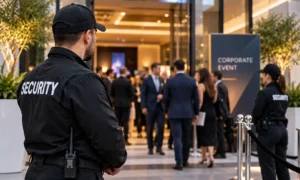
Access control helps direct guests through the intended entrances and keeps restricted areas limited to authorised people. Clear signage, an organised registration process and trained staff can reduce confusion on arrival. Decide in advance how to handle late arrivals, lost credentials and people who are not on the guest list. Avoid creating a queue that blocks an exit or public thoroughfare.
For multi-room events, organisers can define which credentials allow entry to each area and how staff should respond if a person tries to enter a restricted space. Use Avatar’s event access control checklist and guide to event security types and provider selection as planning references.
How many security guards does a corporate event need?
There is no universal number. A seated function with one controlled entrance differs from a multi-room conference with several access points, multiple sessions and valuable equipment. A provider should consider the layout, guest movement, operating hours, access arrangements and specific risks before recommending coverage.
It can help to list the tasks that need coverage, such as greeting and access checks, monitoring a loading area, patrolling public spaces or managing a crowd, then discuss where each role should be positioned. See the factors that affect crowd controller numbers. Staffing recommendations should be explained in relation to the event plan rather than presented as a fixed ratio that applies everywhere.
What should be agreed before event day?
Confirm arrival times, briefing arrangements, communication channels, reporting expectations and escalation steps. Share the run sheet and changes promptly. Make sure the team knows who can authorise operational decisions, such as pausing entry or closing an area. Agree how the security lead will contact the organiser and venue representative if an issue arises.
After the event, review incidents and feedback with the provider. Note what worked, where delays occurred and whether the event schedule or access plan changed. These observations can make planning more efficient next time.
Frequently Asked Questions
1. When should a business book event security?
As early as practical, particularly for larger events or venues that need detailed coordination. Early discussions allow time for a venue review and clear role allocation.
2. Does every corporate function need crowd controllers?
Not necessarily. The need depends on the event’s risks, access arrangements and operating conditions. Discuss the format and venue with a qualified provider.
3. What information should I provide when requesting an event security quote?
Provide the date, hours, venue, expected attendance, event schedule, access points and any specific concerns. Include bump-in and pack-down times if security is needed then.
4. What does access control involve at a corporate event?
It can include monitoring entry points, checking credentials and directing guests, according to the organiser’s requirements and venue procedures.
5. Should security staff receive the event run sheet?
Yes. Sharing the schedule, key contacts and relevant venue information helps the team understand timing, guest movement and planned changes.
Make security part of event planning
A well-briefed team can support a professional guest experience and help organisers respond when plans change. Contact Avatar Security to discuss a tailored corporate event security plan and crowd control requirements.