

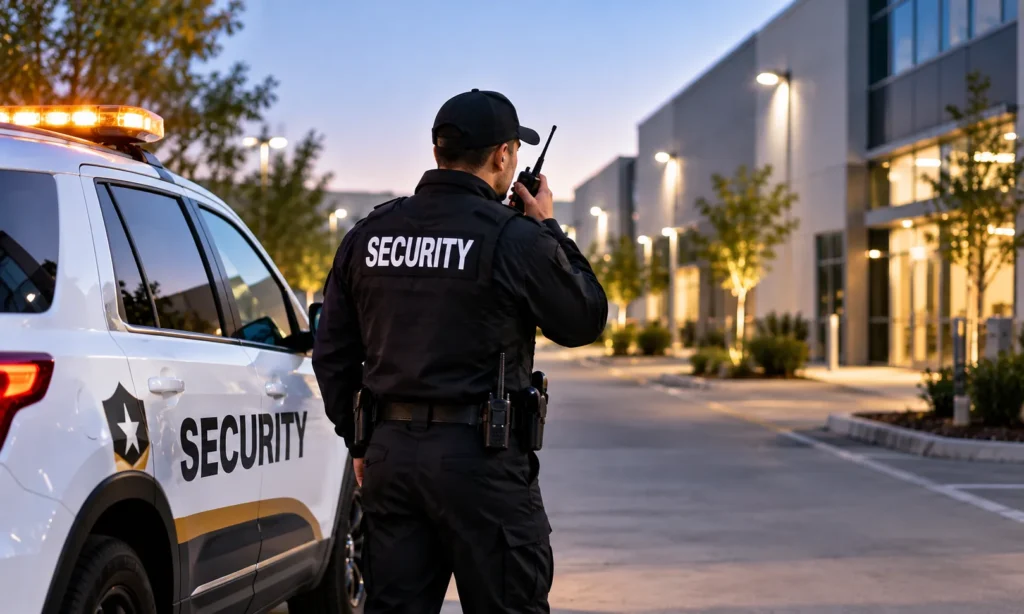
Mobile patrol security for businesses uses officers who visit a property, check agreed areas and follow reporting procedures. It can suit organisations with multiple buildings, large sites or after-hours concerns that do not require a guard stationed at every location continuously. Visits may be scheduled or arranged at varied times according to the service plan.
For example, a business may need checks after closing, around a perimeter or across several locations that do not require a permanent guard at each site. A patrol can provide a physical presence and identify issues during a visit, but it is not continuous observation between visits. The plan should be designed around operating hours, access points and known risks. Avatar Security offers mobile patrol security in Melbourne for commercial, industrial and other properties.
Key Takeaways
- Officers visit one or more sites according to an agreed route or schedule.
- Checks may include perimeters, doors, gates and other priority areas.
- Clear site instructions help guards report and escalate issues consistently.
- Patrols can complement alarms, cameras, access controls or on-site guards.
What happens during a mobile patrol?
An officer attends the property and follows the site instructions. Depending on the assignment, checks may include inspecting doors and gates, looking for damage or unusual activity, confirming a site is secure after closing or completing a lock-up procedure. The officer may check specified areas such as loading zones, car parks, fences or storage areas where access is authorised and the plan requires it.
If an issue is found, the officer records it and contacts the nominated person or emergency service as agreed. Useful reporting should state the time, location, observation and action taken. Site instructions should explain what to do if a door is unsecured, an alarm is activated, damage is found or the officer cannot access an area. Read more about what mobile patrol security involves and compare mobile patrols with static guards.
When can mobile patrols suit a business?
Patrols may suit properties that are unoccupied outside business hours, businesses needing checks across several sites or organisations wanting a physical response option without continuous on-site coverage. They may also support temporary needs, such as a period of elevated risk or a project site with changing conditions.
Consider what the site needs between visits. If staff, visitors or deliveries are present throughout the day, a patrol that only attends at selected times may not meet the need for immediate assistance. A site with continuous public access, a busy reception or high-value operations may need fixed personnel too. A provider can assess how patrols fit alongside asset protection security, alarms, lighting and access controls.
What should a business agree with its provider?
Document priority areas, access procedures, key or alarm handling, contact details, reporting format and escalation steps. Tell the provider about hazards, delivery schedules and areas that must remain accessible. Specify which staff can be contacted and what should happen if nobody answers. Review reports and incidents regularly so the plan can change when the business does.
It is also useful to agree how often patrol visits are required, whether timing should vary, what proof of attendance or checkpoint reporting is supplied, and how urgent issues are escalated. The arrangement should be realistic for the site and clear to the people who manage it.
Frequently Asked Questions
1. Are mobile patrols available after hours?
Service hours depend on the arrangement with the provider. Businesses can discuss the days and time windows when checks are needed.
2. Can patrols cover multiple business sites?
They can be planned for multiple properties, subject to location, visit requirements and the agreed schedule.
3. What do mobile patrol guards check?
Checks vary by site but may include perimeters, doors, gates, restricted areas and other locations identified in the site instructions.
4. Are mobile patrols a replacement for static guards?
Not in every situation. Patrols provide visits, while static guards remain on site. The suitable option depends on required coverage, operating hours and risks.
5. What should I prepare before starting mobile patrols?
Provide access instructions, priority check areas, emergency contacts, reporting requirements and details about site hazards or operating schedules.
Choose patrol coverage around your site
Mobile patrols work best when officers have clear instructions and the business receives useful reports. Share your locations, hours and concerns with Avatar Security to discuss a suitable mobile patrol plan.